Mixing Metals Like A Pro (Learn How To Combine Brass, Chrome and Black Without It Looking Messy)

Gone are the days when every handle, tap, and light fitting in your home had to match perfectly. The "matchy-matchy" approach? It's officially retired. Today's most beautiful interiors embrace a thoughtful blend of metal finishes, and when done well, it looks incredibly intentional and sophisticated.
But here's the thing. There's a fine line between "curated and collected" and "chaotic jumble sale." If you've ever stood in your kitchen wondering whether your brushed brass cabinet pulls will clash horribly with your chrome tap, you're not alone.
The good news? Mixing metals is far less complicated than it seems. You just need a few guiding principles to get it right.

The Golden Rule: 70/30
If you take away just one thing from this post, let it be this: the 70/30 rule.
It works like this. Choose one metal to be your dominant finish and this will make up roughly 70% of the metallic accents in your space. Your secondary metals (ideally no more than two) should account for the remaining 30%.
This ratio creates visual harmony. Your eye has something to anchor to while the secondary finishes add interest and depth without competing for attention.
So if you're working with brass, chrome, and black, one of those needs to take the lead. The other two play supporting roles.
Simple enough, right?

Choosing Your Dominant Metal
This is where you get to set the mood for your entire space.
Brass and gold hardware bring warmth. They're perfect if you want a room to feel cosy, inviting, and a touch luxurious. Think rich wood tones, warm whites, and tactile fabrics. Brushed brass cabinet pulls on a run of kitchen cabinetry instantly elevate the space without feeling showy.
Chrome and silver door knobs lean cooler and more contemporary. If your aesthetic skews modern, minimal, or Scandi-inspired, chrome makes an excellent anchor. It's crisp, clean, and pairs beautifully with cool greys and bright whites.
Black is a bit of a chameleon. It can read warm or cool depending on what you pair it with. However, we'd suggest using black as a secondary accent rather than your dominant metal. Too much black hardware can feel heavy and overwhelming, whereas strategic touches of matte black add definition and graphic punch.
Ask yourself: what feeling do I want when I walk into this room? Warm and welcoming? Cool and contemporary? Your answer will guide your dominant metal choice.

Understanding Warm vs Cool Tones
Here's a little colour theory for you.
Brass and gold are warm metals. Chrome, silver, and black are cool. When you mix metals across temperature categories, you're creating contrast, and contrast is what makes a room feel dynamic and interesting.
The trick is balance.
If brass is your dominant metal, the coolness of chrome or black will stop it from feeling too yellow or dated. And if chrome leads the way, a few warm brass accents will prevent the space from feeling sterile or cold.
This interplay between warm and cool is actually what makes mixed metals look so intentional. It's not random: it's designed.

Distribution Is Everything
One of the biggest mistakes people make when mixing metals? Clustering all of one finish in a single spot.
Imagine a kitchen where all the gold hardware lives on the island, all the chrome is on the perimeter cabinets, and there's a single black pendant light hovering awkwardly in the corner. It reads as three separate decisions rather than one cohesive design.
Instead, distribute your metals throughout the room. If you've got brushed brass cabinet pulls on your base units, consider a brass element elsewhere - perhaps a small shelf bracket or a decorative object on the worktop. Bring your chrome in through the tap, but echo it with silver door knobs on an adjoining utility room or pantry door.
This repetition creates rhythm. Your eye travels around the space and spots familiar finishes, which ties everything together without being overly obvious about it.

Don't Forget About Texture
Here's where things get really interesting.
Brass isn't just one thing. You've got polished brass, brushed brass, satin brass, antique brass, unlacquered brass - the list goes on. The same applies to chrome (polished vs brushed) and black (matte vs gloss).
Varying the texture of your metals adds another layer of sophistication. A polished brass tap alongside brushed brass cabinet pulls creates subtle contrast. Matte black handles paired with a glossy black accent piece keeps things from feeling flat.
Think of texture as the spice in your recipe. The metals are your main ingredients, but the finishes are what make the dish complex and memorable.
In the kitchen: The kitchen typically has the most hardware, so this is where your dominant metal should really shine. If you've chosen brass, let your brushed brass cabinet pulls do the heavy lifting. Bring in chrome through your appliances or tap, and use black sparingly: perhaps on a statement range cooker or open shelving brackets.
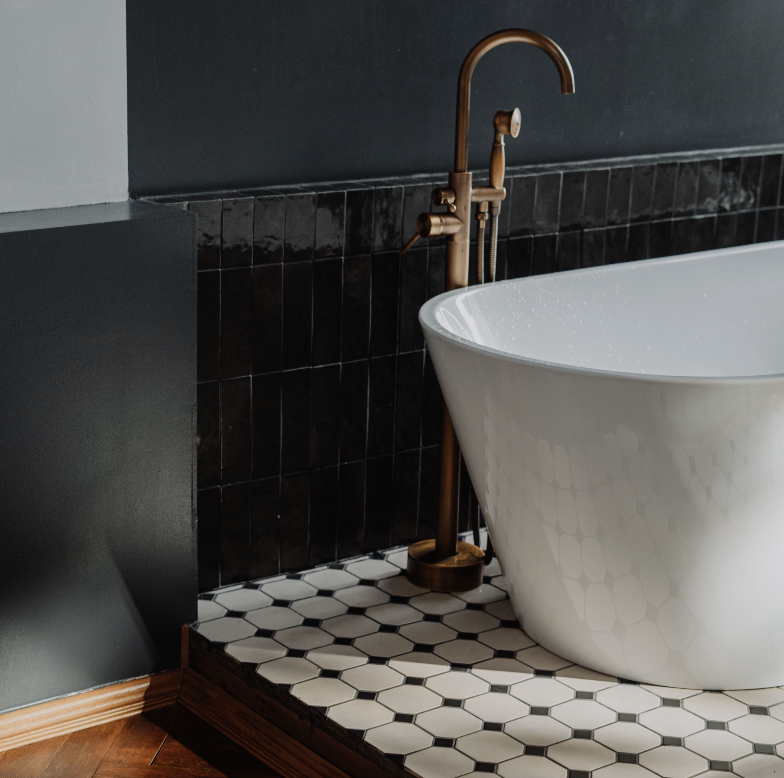
In the bathroom: Bathrooms are smaller so you can get away with a bolder secondary metal presence. A chrome shower set with gold hardware on the vanity and matte black towel hooks creates a layered, boutique-hotel feel.
Throughout the home: Silver door knobs can flow through hallways and bedrooms as your consistent connector finish, while feature rooms like the kitchen or master suite showcase your warmer brass pieces.
Cassius (The Boutique Handle Co) has a knurled texture which is mixed with a brushed accent. You can even mix the metals straight away with the black and gold option!

The Magic Number: Three (Maximum)
With all this talk of mixing, here's an important boundary: stick to a maximum of three metal finishes per space.
Any more than that, and you risk visual clutter. The eye doesn't know where to land, and the room starts to feel busy rather than curated.
With brass, chrome, and black, you're already at full capacity. Resist the temptation to introduce a fourth metal, even if that rose gold tap is calling your name. Save it for another room where it can shine as part of a different trio.

Trust the Process
Mixing metals can feel intimidating at first. But once you understand the principles: dominant vs secondary, warm vs cool, distribution and texture, it becomes far less daunting.
Start with your dominant metal. Add your secondary finishes with intention. Distribute them throughout the space. Vary your textures. And stop at three.
The result? A home that feels collected, confident, and unmistakably yours.
If you're currently planning a hardware refresh and fancy browsing some options, we've got a lovely selection of finishes over at The Boutique Handle Co. From brushed brass cabinet pulls to sleek chrome knobs, there's something for every metal-mixing mood.
Happy styling.

Comments